Hunting Benitoite and Plasma Agate in Mordor
by Ryan Masters, September 30, 2025
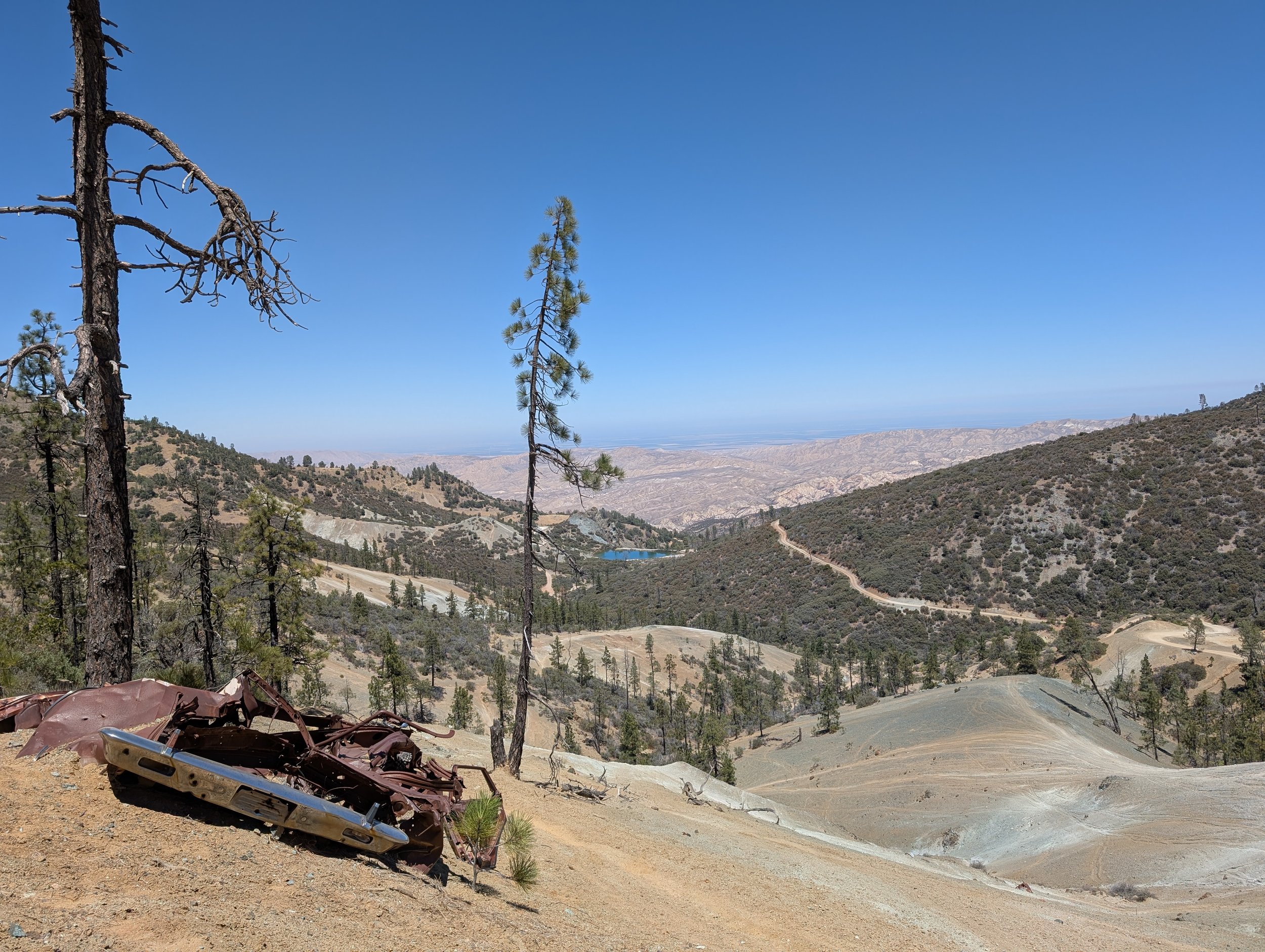
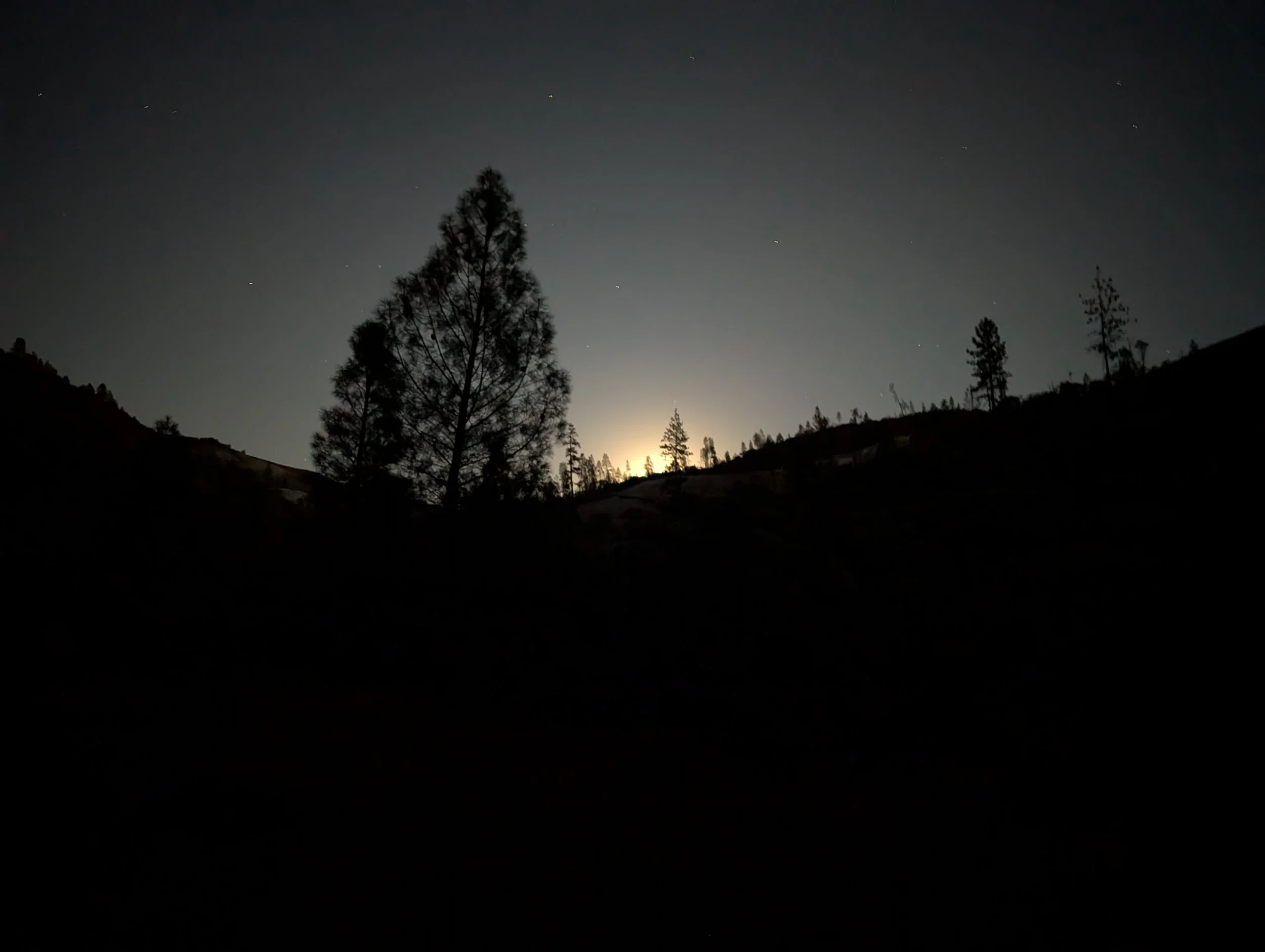
The serpentine barrens of San Benito County divide Monterey County’s Salinas Valley and Fresno County’s San Joaquin Valley. This harsh and surreal landscape in the southern Diablo Range was formed 135 million years ago when the earth folded and pressed itself into unique geologic deposits.
Over the last century, the resulting terrain has yielded more than 20 never-before-seen minerals, yet none qualifies as more dazzling and valuable as benitoite (pronounced beh-nee-TOW-ite), California’s official state gem.
It’s a sapphire-blue jewel with hints of violet that magically fluoresces beneath ultraviolet light.
Never heard of benitoite? You’re not alone.
It remains a well-kept secret. Rarer—and more valuable than diamonds, emeralds or rubies—gem-quality benitoite is worth roughly $8,000 a carat.
Although the mineral itself can be found in Montana, Australia and Japan, the good stuff only occurs here, in this little-known part of California.
Yet today, thanks to an intrepid truck driver and his son, you can find gem-quality benitoite without venturing too far into this dangerous—and awe-inspiring—country.
CLEAR CRAZINESS
The roughly 56-square-mile section of San Benito County now known as the Clear Creek Management Area constitutes one of the world’s largest serpentine deposits.
That greenish rock gains its name for its snake-like patterns and has a waxen feel. It also contains a naturally occurring asbestos that can pose a health risk for miners, off-roaders or anyone else kicking up dust in Clear Creek.
Due to these concerns, the Bureau of Land Management (BLM) requires permits for entry, restricts access to main roads and advises visitors to take precautions to reduce dust exposure.
Make no mistake: Clear Creek is a bizarrely beautiful, yet forbidding destination.
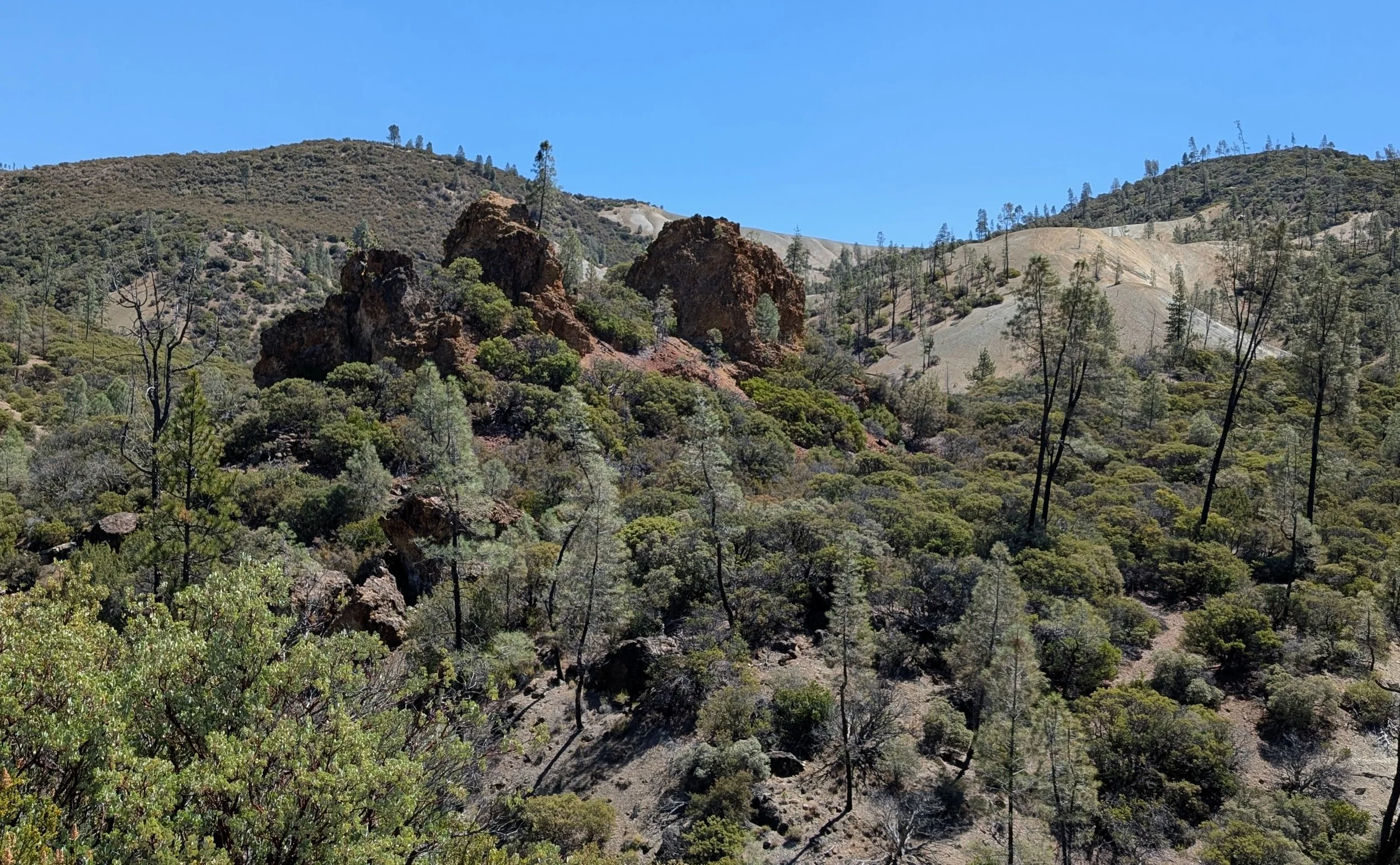
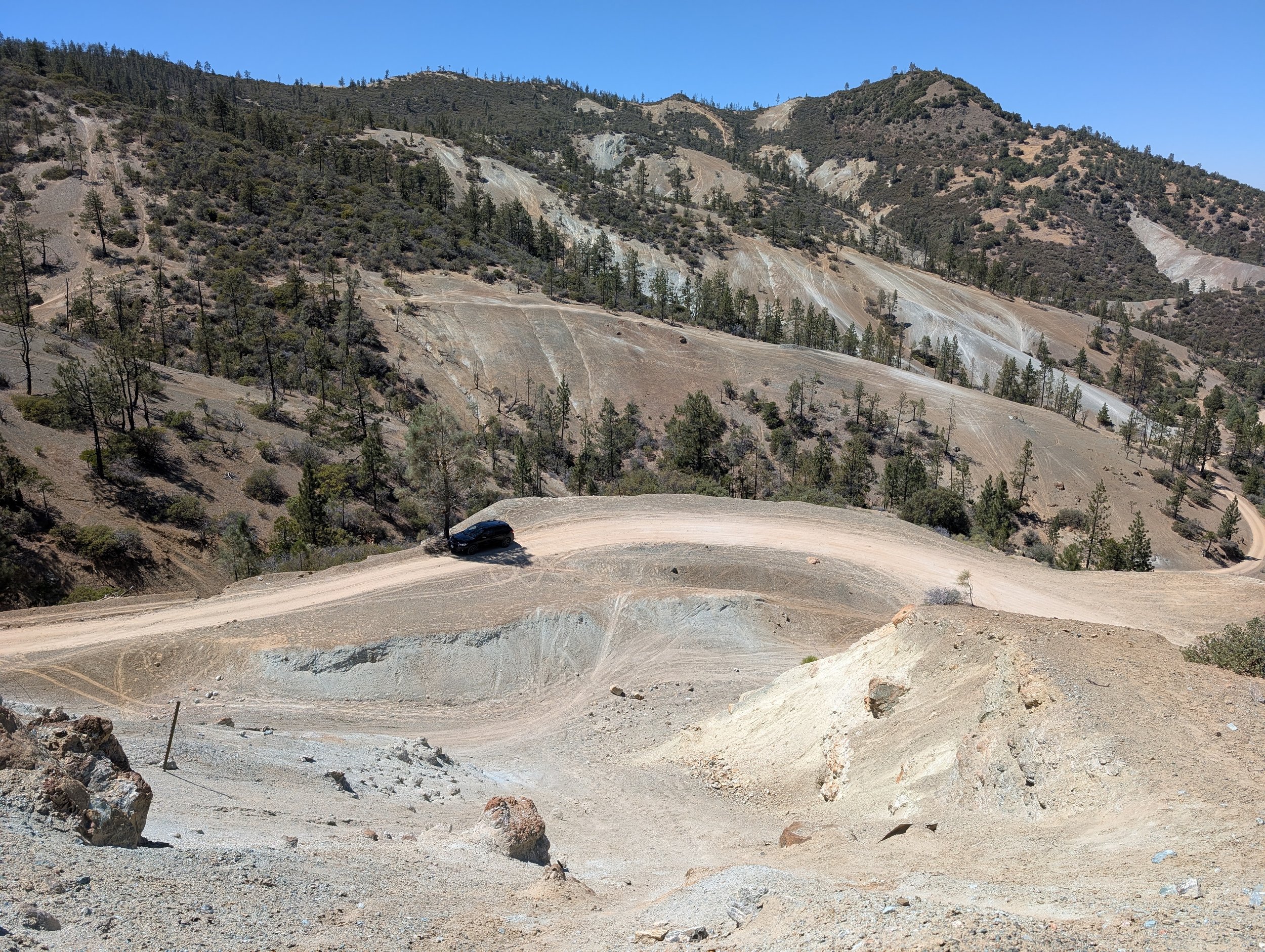
Its lunar slopes resemble abstract art painted in reddish ochre, faint green and cream hues. Outcroppings the color of dirty blood jut imperiously over steep canyons. Stubborn stands of ghost pine and patches of scrub brush cling to toxic soil.
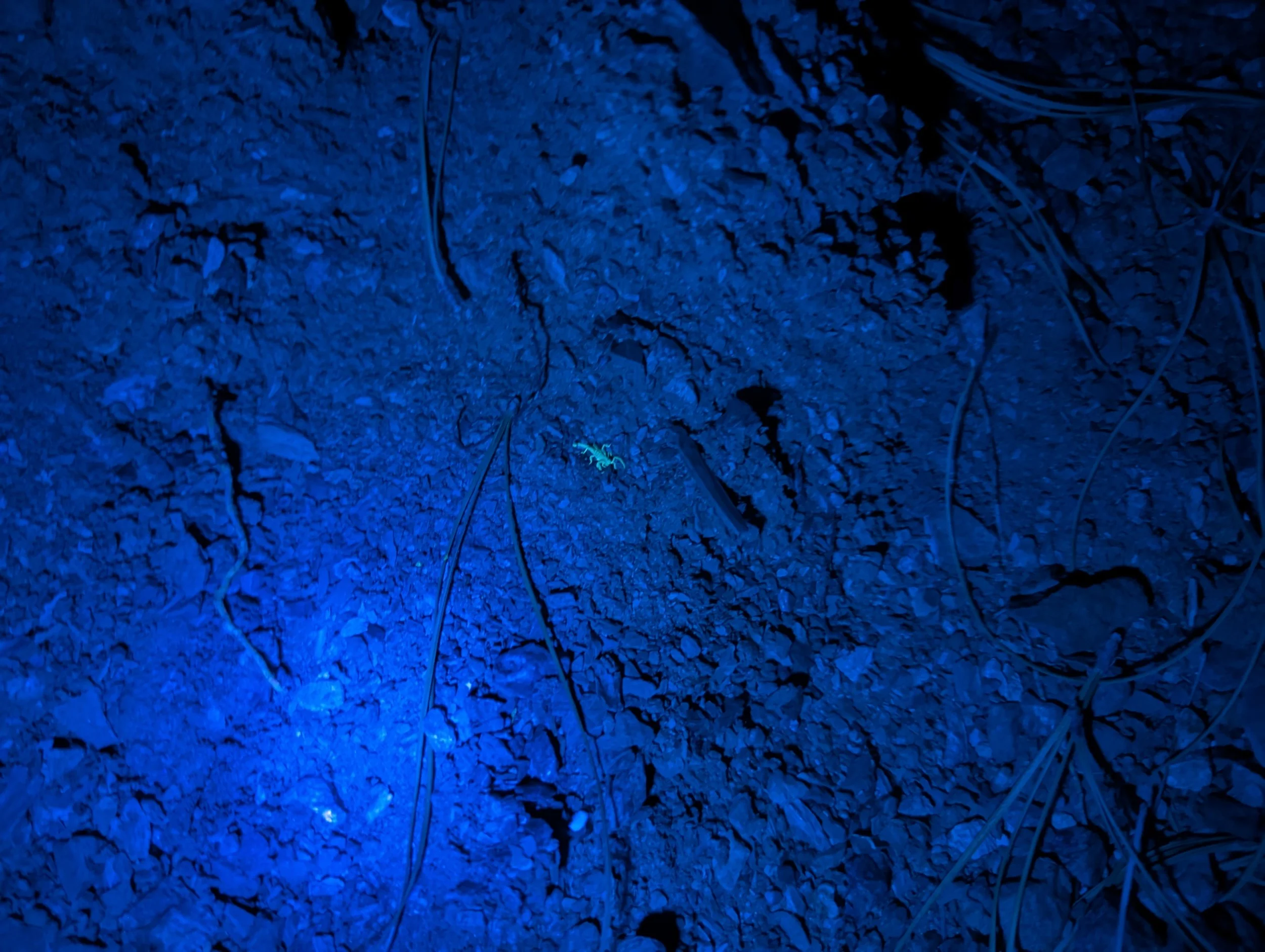
Other than scorpions, rattlesnakes and carrion birds, most wildlife is conspicuously absent in the barrens.
What’s more, the region is difficult to hike and its roads are nearly impossible to traverse without four-wheel drive. Infamous 19th century bandits such as Tiburcio Vásquez and Joaquín Murrieta are rumored to have holed up here.
Yet the area’s porous, sponge-like soils effectively drain all moisture into a system of creeks that flow year-round, projecting wild colors from their undrinkable waters: bright-green jadeite, startling red cinnabar, kaleidoscopic plasma agate, bone-white magnesite. It’s a place unlike any other on Earth.
ONE DOES NOT SIMPLY WALK INTO MORDOR
Whenever I visit the Clear Creek Management Area, I think of Boromir’s description of Mordor: “"One does not simply walk into Mordor. Its Black Gates are guarded by more than just Orcs. There is evil there that does not sleep, and the Great Eye is ever watchful. It is a barren wasteland, riddled with fire and ash and dust, the very air you breathe is a poisonous fume."
Granted, this is not everyone’s idea of a good time. Yes, the serpentine landscape is full of asbestos, the creeks near the New Idria Mine run yellow with sulfur, and the scorpions are plentiful, but Clear Creek is a place you might find in a fantasy novel. There is danger here, but for those who dare—there is treasure.
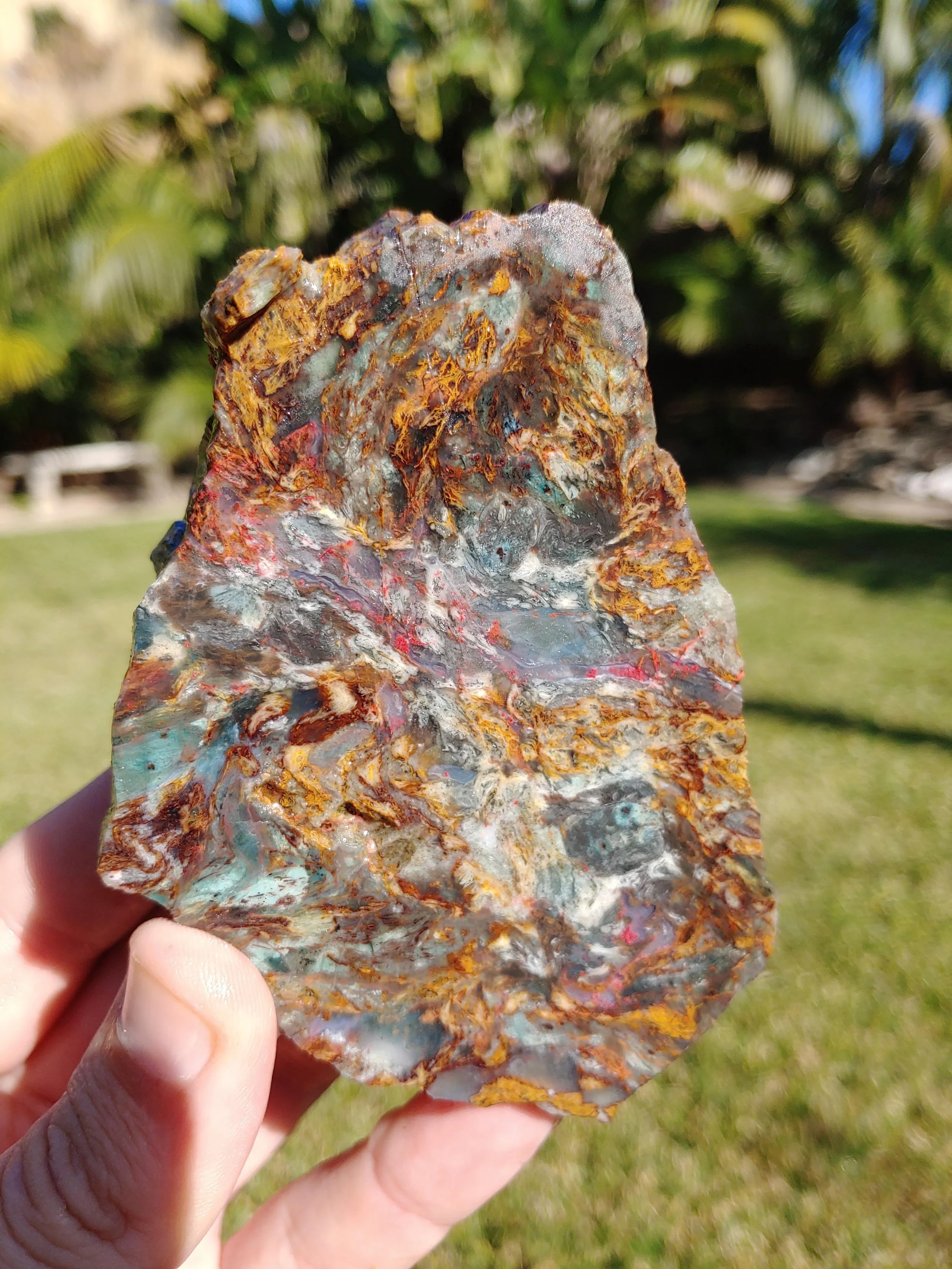
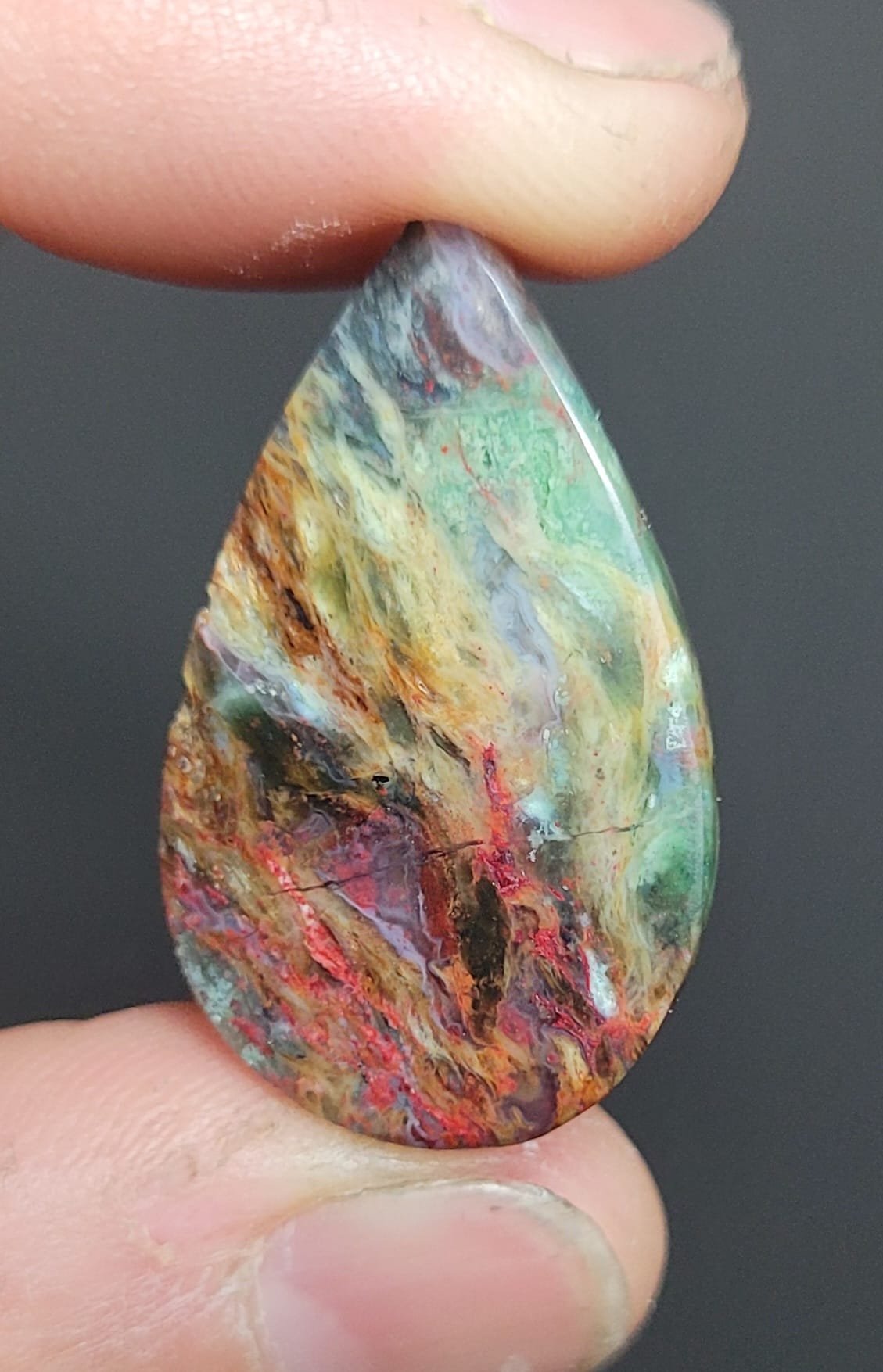
While benitoite is extremely difficult to find on one’s own, Clear Creek is also the exclusive home of plasma agate—a non-banded agate-jasper conglomerate with astonishingly vibrant, swirly, psychedelic patterns. It’s composed of chalcedony, serpentine, jade or jadeite, chromite, and various other minerals, which gives way to an array of colors. The best pieces feature shades of green, blue, gray, and black, often with rare, highly prized red cinnabar inclusions.
I’ve spent countless days wandering the narrow winding roads, walking the translucent creeks, and crawling into long-abandoned mines in search of the stuff. Like Big Sur jade hunts, my plasma agate hunts border upon obsession. I admit I have lost myself down the scrub gullies of my mind searching for this gorgeous conglomerate. As the ring consumed Golem, the desire for perfect plasma agate has consumed me.
But it’s also the mystery of the place that attracts me. Everyone has strange stories about weird encounters in Clear Creek—with the ghosts of long-dead outlaws, with aliens, with heavily-armed Scandinavian men in suits. I heard the latter story at a Santa Cruz Mineral & Gem Society show from a rockhound who’d found himself way off the beaten track in Clear Creek. He said he stumbled across a large mine, its mouth shut tight with what appeared to be a stainless steel door. When he approached it, the door swung wide and two men with long blonde ponytails and “Men in Black” suits emerged cradling automatic weapons in their arms. He said he didn’t stick around to see what language they spoke, but they appeared “Nordic”.
As crazy as this story may sound, it’s not beyond belief. Clear Creek contains minerals that don’t occur anywhere else on the planet. Who knows what’s being mined back there? And by whom?
The DISCOVERY OF BENITOITE
In early February of 1907, an inexperienced prospector and failed melon farmer named Jim Couch set out into the serpentine barrens north of Coalinga.
Staked with $50 worth of supplies and a horse by mining speculators Roderick Dallas and Thomas Sanders, he wandered for more than two weeks, scanning the eroding hills around the headwaters of the San Benito River for mineral deposits.
Couch was on the lookout for cinnabar, a source of mercury. The New Idria Mercury Mine, located 13 miles to the north of where Couch was exploring, had been claimed 50 years earlier and was on its way to becoming the second-most-productive mercury mine in North America.
Dallas and Sanders were hoping their $50 investment might yield another source of the valuable element, which, at the time, was used extensively in a wide array of industrial processes, medicine and scientific equipment.
On Feb. 22, Couch camped in a forest glade near a small tributary of the San Benito River, and set out on foot to look for promising outcroppings. On his way up the slope opposite his camp, he wandered into a patch of small, dark-blue hexagonal crystals.
At first, Couch thought he’d stumbled into a field of sparkling diamonds or sapphires. Elated, he hurried back to Coalinga with specimens.
Dallas and Sander were impressed, but when jewelers couldn’t identify the unique gem, their euphoria turned to puzzlement.
Not until Couch’s gems reached the lab of Berkeley geologist George Louderback were they identified as an entirely new discovery.
The glittering blue crystals were softer than most sought-after gems—6.5 on the Mohs scale of hardness (compared to a diamond’s 10)—but they had a world-class refractive index, or “sparkle.” In a nod to the area where it was found, Louderback named the gemstone benitoite.
For the next three years, Couch and his benefactors mined benitoite. Before long, they realized the mine wasn’t going to transform them into the next Rockefellers. The gem was not only scarce, it was difficult and time-consuming to extract.
Not that there wasn’t interest. Shortly after the initial discovery, Tiffany & Co. offered to sign an exclusive deal to sell benitoite, but ultimately deemed the stone too rare to market.
In 1910, the Dallas Gem Mine, as it had been dubbed, was shut down.
GOLDEN STATE GEM
Over the next 75 years, the Dallas family leased the mine out to various operations. While the mine never made anyone wealthy, the large amount of specimens and rough gem material extracted over the years made benitoite a must-have among collectors and a challenge for adventurous jewelers.
Elvis “Buzz” Gray and Bill Forrest leased the mine from 1967 to 2001 and probably did the most to raise awareness of benitoite. In 1985, they were among the driving forces behind the California legislature naming benitoite as the state gemstone.
Gray and Forrest bought the mine from the Dallas family in 1987 and, over the next 12 years, the property was expanded, tested and mined.
In 2000, they sold the mine to a group out of Colorado, which operated a processing plant. Four years later, the company considered the mine no longer commercially viable and sold it to a truck-driver-turned-machinist from Coalinga.
New direction
As a truck driver hauling loads through the Central Valley in the 1980s, Dave Schreiner fell in love with the history, beauty and geology of the hills outside of Coalinga.
In 1992, Schreiner bought a compound of deteriorating buildings roughly 10 miles south of the gem mine. The structures, which included barracks and a large dining hall, were built in 1940 to house 300 California correctional department inmates.
At the outset of World War II, this incarcerated labor force was tasked with transforming the wagon trail that led from Coalinga to Clear Creek into a road that could support large government ore trucks. After the state closed the camp in 1955, it became a CAL FIRE base before housing the California Conservation Corps.
Throughout the 1990s, Schreiner began the slow and arduous process of renovating the structures into a compound for his new family. But benitoite was never far from his mind. He continued to prospect around Clear Creek, hoping to find another source of the gem, but found nothing. So when the Benitoite Gem Mine came up for sale in 2004, he leapt at the chance.
Mine-fullness
Dave Schreiner’s son John was in high school when his father purchased the Benitoite Gem Mine. Knowing that they didn’t have the manpower to work the mine full time, Dave Schreiner decided to offer a “fee digging” operation. Members of the public could pay to sift through the benitoite-rich dirt outside of the mine and keep what they found.
At first, they met customers at the mine, but that proved to be a logistical hassle and security risk. Driving to the mine required customers to navigate a confusing cobweb of roads. People often became lost or stuck en route. Plus, there was no way to monitor the mine remotely or keep trespassers out. The Schreiners would often arrive at the mine to find their “No Trespassing” signs riddled with shotgun holes.
When the BLM closed the Clear Creek Management Area in 2008 to study how much danger the asbestos posed to the public, that proved to be the last straw. The Schreiners shut down their on-site fee-digging operation and re-evaluated their business model.
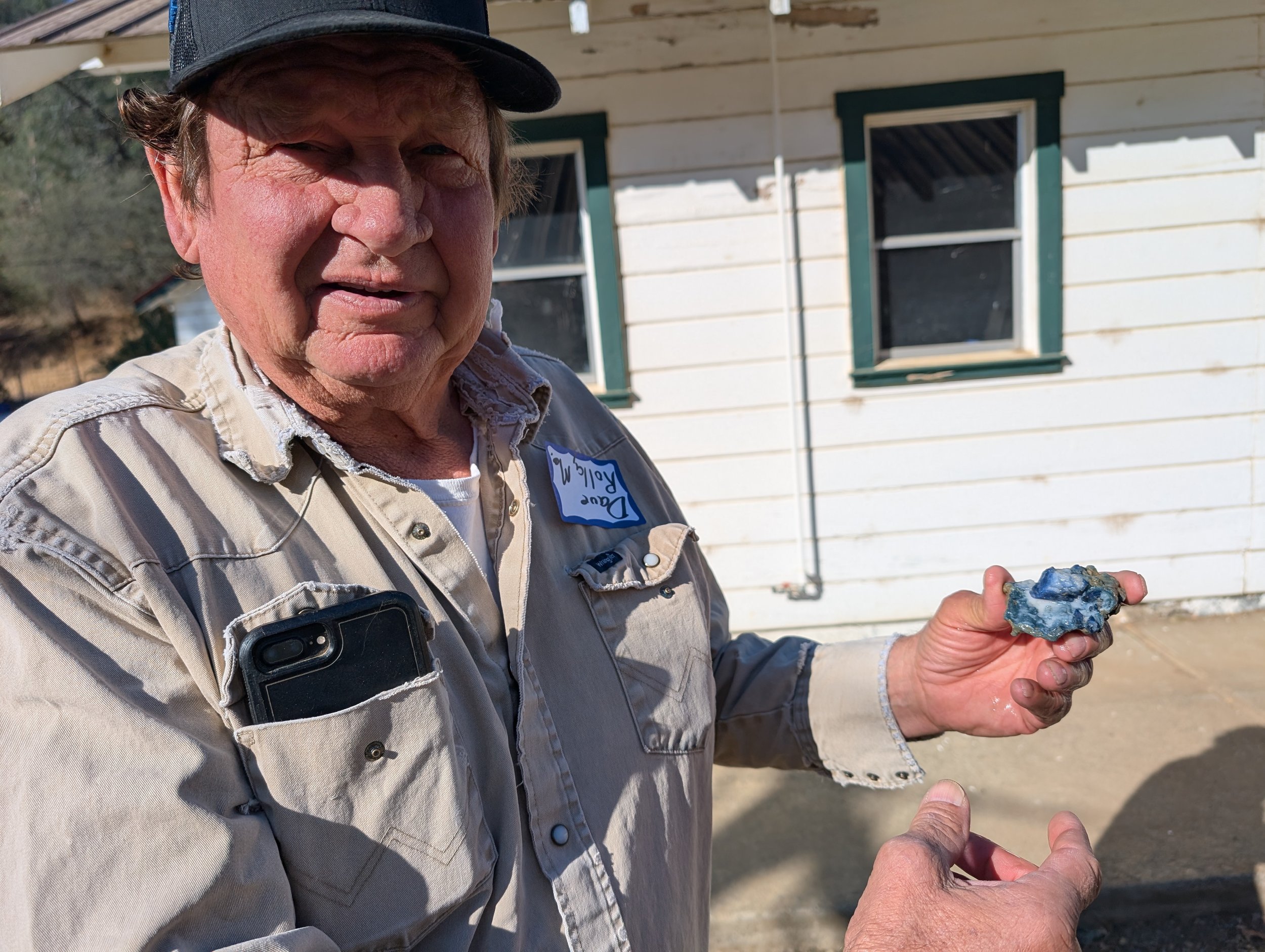
Today, Dave Schreiner (now 68) and John (34) haul dirt in dump trucks from the Benitoite Gem Mine’s grounds to be processed at the family’s road-camp compound, which they’ve renamed the Benitoite Mining Co. Now anyone willing to pay can experience the thrill of finding benitoite without risking life or limb to get there.
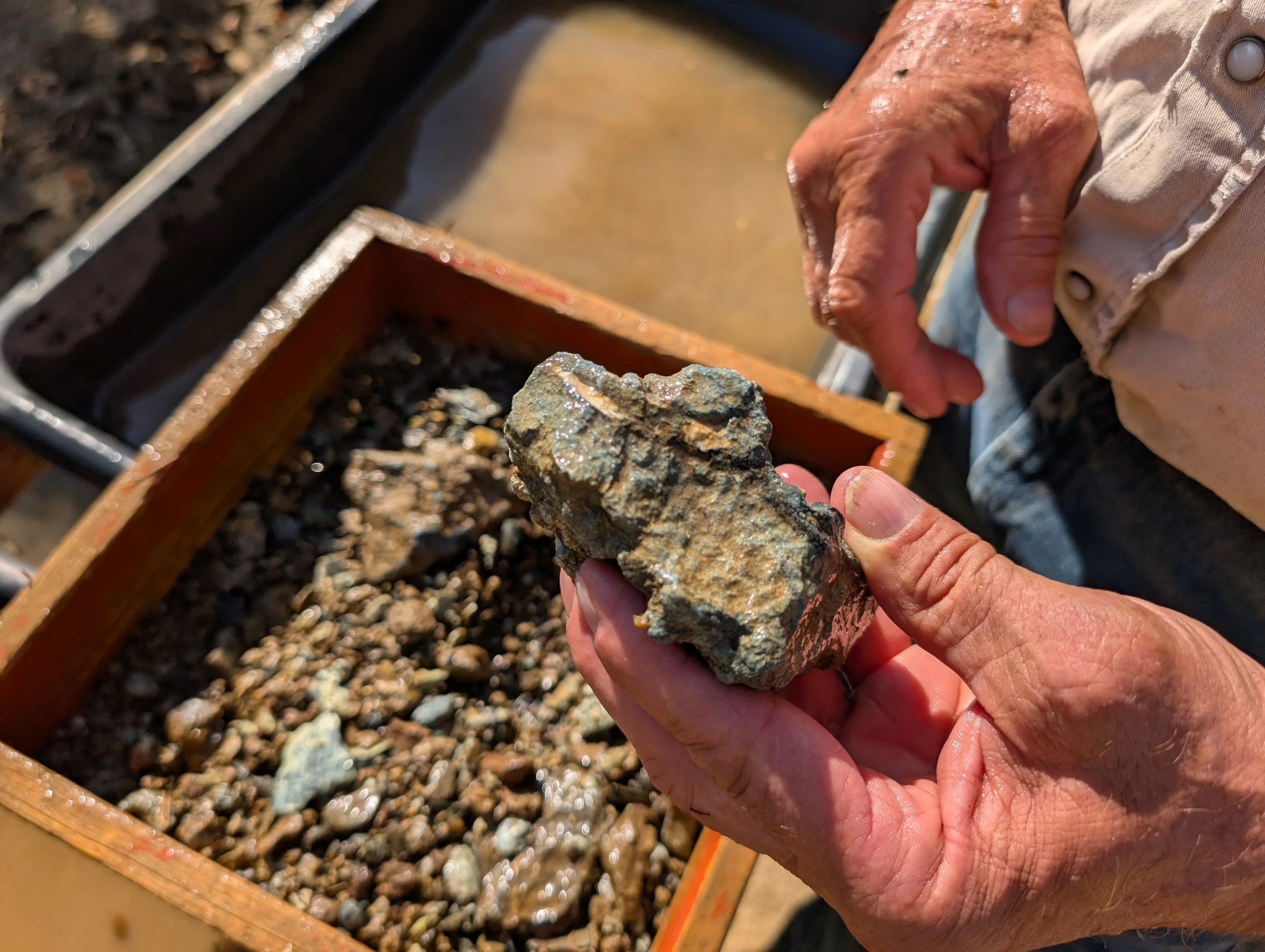
For a fee ($140/adults; $75/children 12 and under), benitoite hunters can spend the day sifting through a pile of the mine’s dirt for the small triangular gems and larger specimens, which occur in white natrolite, a calcium-based mineral found in the light-blue schist.
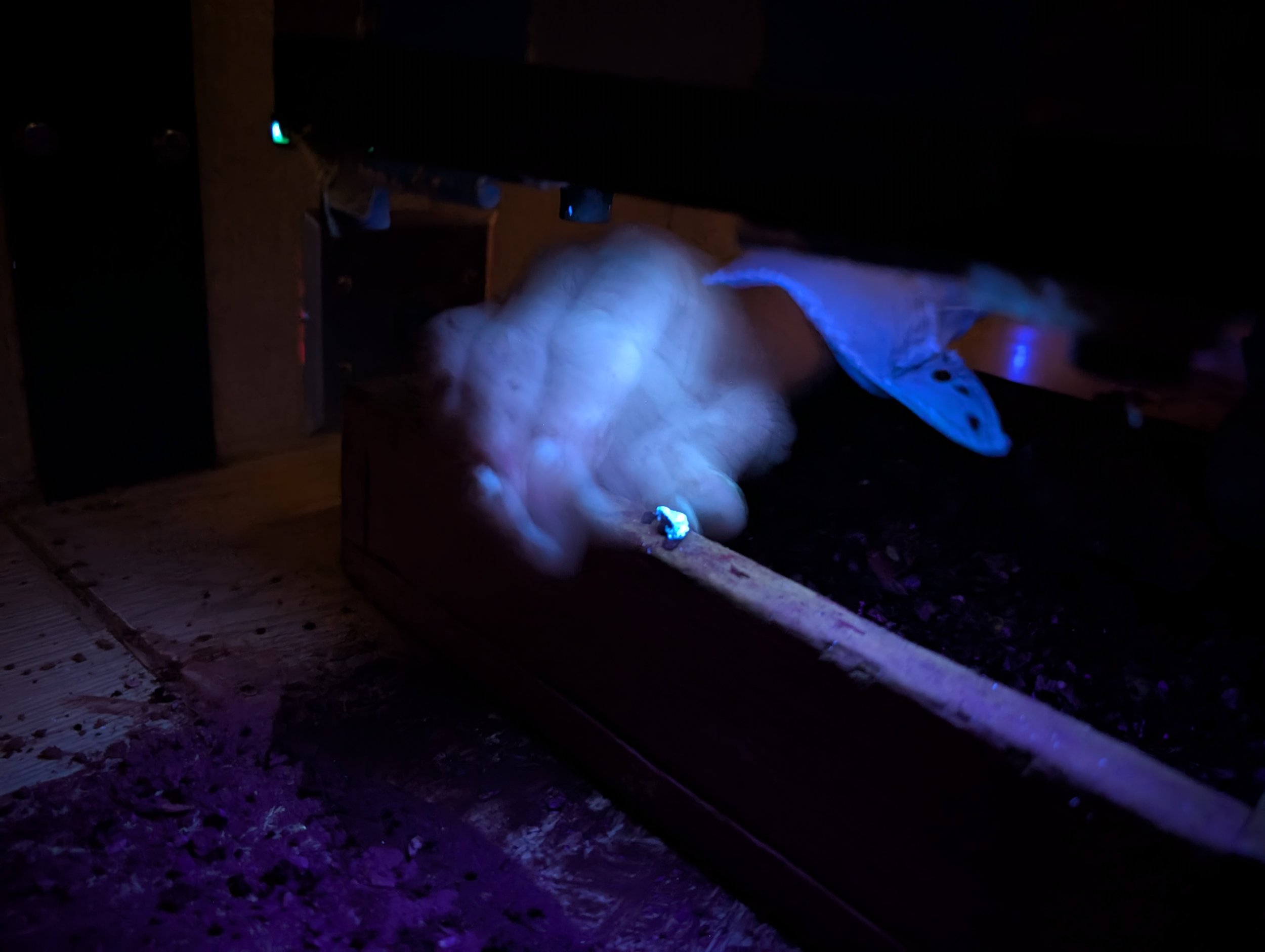
The Schreiners provide handheld shaking screens to separate the blue schist, natrolite and crystals from the dirt as well as convenient wash tables, but it’s still a hard day’s work, especially in the summer. To make finding the fluorescent benitoite easier, the Schreiners converted one of the road camp buildings into a black-light room.
Dave Schreiner’s sun-worn face has begun to take on the look of ochre-colored serpentine barrens, but his eyes remain gem-bright when he talks benitoite.
Most everyone finds something, he notes, estimating one in 20 find a stone with “pretty good’ value to it—even the smallest stones can be worth between $90 and $160. The trick, of course, is knowing the indicators and finding something good, but it takes some doing.
“Sometimes you find your best stone in your first screen, sometimes your last,” he says.
NEXT DEPTH
Shortly after the Schreiners bought the mine, a rumor began to spread that it was totally depleted. Yet father and son insist that plenty of benitoite remains.
Jim Couch’s original discovery in 1907 consisted of a 60-meter pipe of benitoite-rich blue schist. That pipe of material was completely mined out over the past century. However, an unknown amount of benitoite remains in the loose soil around the mine.
“Everything we’ve ever dug is off the top of the ground,” John Schreiner says. “And every load still has a lot of material in it.”
And some loads still contain jaw-dropping discoveries. In August, while customers sifted dirt at the Benitoite Mining Co., Schreiner sauntered up to the pile and plucked a magnificent specimen from it. He estimates the piece, which contains large gems set in the matrix of white natrolite, to be worth roughly $40,000.
“While there’s not a lot of people willing to drop that much money for one specimen,” he says, “there’s definitely a market among gem-and-mineral collectors—people who want to display it in their collections.”
Today, the Schreiners’ continue to make improvements to their historic compound and hope, someday, to expand the Benitoite Mining Co. into a campground with cabins and RV hookups.
“We want to keep a family-friendly vibe up here,” John Schreiner says. “That’s kind of what it’s all about.”
For more information and to make a reservation, visit benitoitemining.com or call 1-833-GEM-HUNT. The Benitoite Mining Co. is located at 48242 Los Gatos Road, Coalinga.